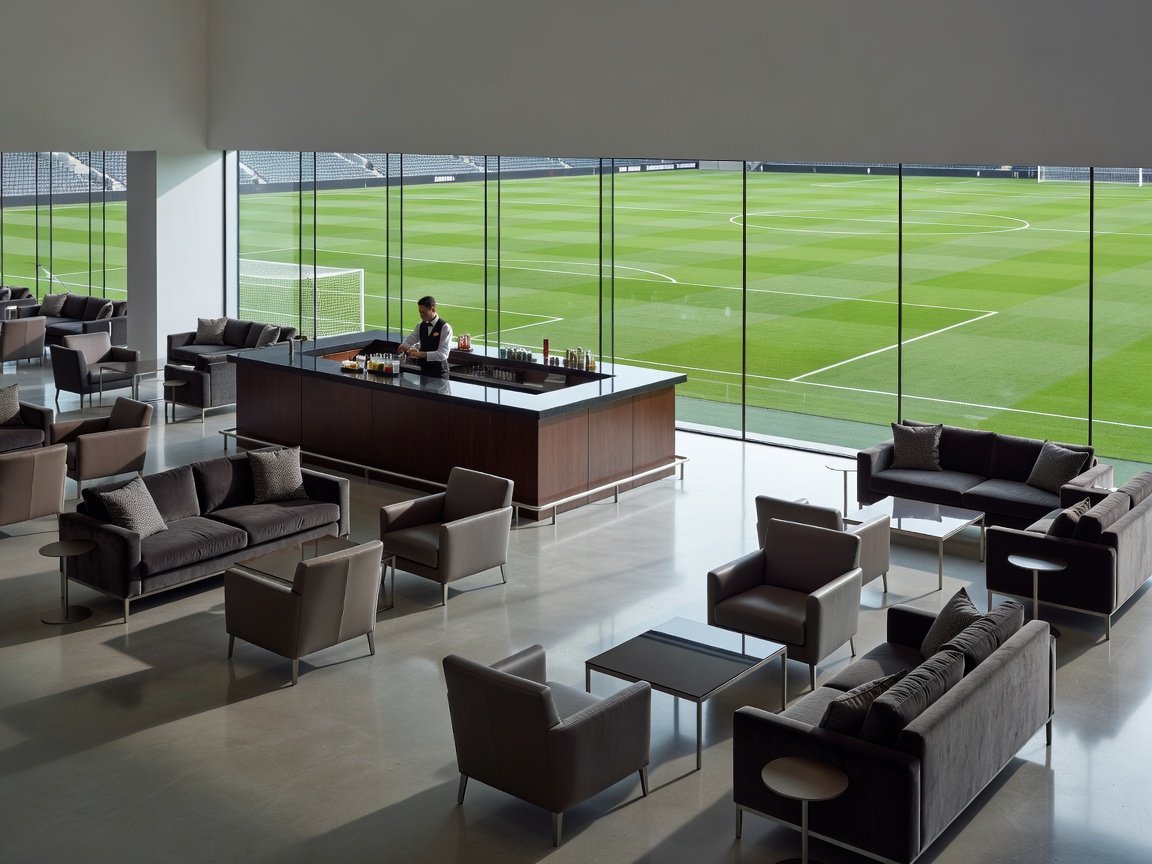
The Social Heart of Modern Arena Design
When we examine the evolution of stadium architecture over the past two decades, one transition stands out above all others: the departure from stiff corporate entertaining in favor of vibrant, fluid hospitality lounges. Traditional hospitality often locked guests behind heavy mahogany doors inside enclosed rooms. Modern sports fans and corporate leaders alike want something much livelier—they want to feel the hum of the crowd while enjoying immaculate food, rapid bar access, and room to move.
An executive stadium lounge delivers exactly that balance. Spanning wide concourses along the mid-tier or prime club levels, these spaces are designed to encourage organic mingling. Instead of being seated at a fixed banquet table for three continuous hours, guests can circulate freely between artisan cooking stations, high-top cocktail tables, lounge booths, and the terrace doorway. This makes the executive lounge particularly suited for parties of two to eight guests who want the match day to feel celebratory, social, and connected to the wider stadium energy.
Spatial Layouts: Micro-Zones That Prevent Bottlenecks
The most successful executive lounges rely on clever architectural zoning. When three hundred to five hundred guests occupy a single lounge area before kickoff, circulation design is everything. In our review of venue blueprints, the highest-performing lounges segment their floor plans into four distinct zones:
- The Arrival & Welcome Threshold: Positioned immediately off dedicated executive elevators, featuring coat drops and a sparkling wine greeting point so arriving guests never obstruct interior walkways.
- The Culinary Island: Centrally positioned open kitchens or live cooking stations where chefs prepare fresh dishes right in front of attendees, eliminating long traditional buffet queues.
- The Casual Interaction Ring: A mix of tall dry tables and banquette clusters with direct sightlines to television screens running pre-match team analyses and tactical boards.
- The Acoustic Concourse Portal: Acoustic transition vestibules that dampen the roar of the bowl while you are eating, yet allow you to step directly out onto your padded mid-tier seat in under thirty seconds.
Advantages and Trade-Offs of Lounge Hospitality
To choose the right match-day package, it helps to understand what an executive lounge does best, and where another format like a private box might be preferred:
| Lounge Feature | Why Guests Value It | Points to Consider |
|---|---|---|
| Flexible Guest Counts | Ideal for pairs, trios, or small business parties without booking a ten-person minimum. | Seating tables inside the lounge are often shared during peak pre-match meal windows. |
| Atmospheric Buzz | High collective energy, shared cheers, guest speakers, and former player Q&A sessions. | Louder ambient noise makes confidential contract negotiations difficult. |
| Dynamic Dining | Rotational street food concepts, carving blocks, and wine bars that cater to diverse tastes. | Less formal pacing compared to a five-course seated silver-service dining room. |
Timing the Lounge Experience: From Doors Open to Full Time
We always advise guests to treat an executive lounge pass as a full half-day engagement. Most world-class stadia open lounge doors two and a half to three hours before kickoff. Arriving early lets you claim a favored corner table, meet associates without feeling hurried, and sample freshly prepared seasonal courses before the venue fills to peak density.
During halftime, the lounge transforms. High-speed draught taps and pre-poured refreshments ensure you don’t spend the entire fifteen-minute interval waiting in line. At the final whistle, rather than battling forty thousand fans heading for metro turnstiles and perimeter car parks, you can re-enter the lounge for post-game cheeses, hot flat whites, and live televised post-match press conferences while the outdoor crowds disperse.
Key Selection Criteria When Booking
When evaluating lounge options across premier sporting venues, check three critical specifications before committing:
- Terrace Seating Location: Does the lounge grant access to seats directly adjacent to its doors, or will you have to navigate two flights of stairs to reach your tier? Direct vomitory access is always preferred.
- Inclusive Beverage Policy: Clarify whether boutique wines, craft draught beers, and spirits are included throughout the duration, or if bar tabs become cash-based at halftime.
- Dress Code Guidelines: Lounge dress expectations vary from smart casual (tailored jeans and sports jackets) to strict collared shirts without athletic footwear. Knowing this beforehand prevents awkward arrival moments.
Need Tailored Guidance on Stadium Lounge Packages?
Our team assists corporate hosts and passionate sporting enthusiasts in selecting hospitality spaces tailored precisely to your party size and entertainment goals.
Connect with Our Advisory Team