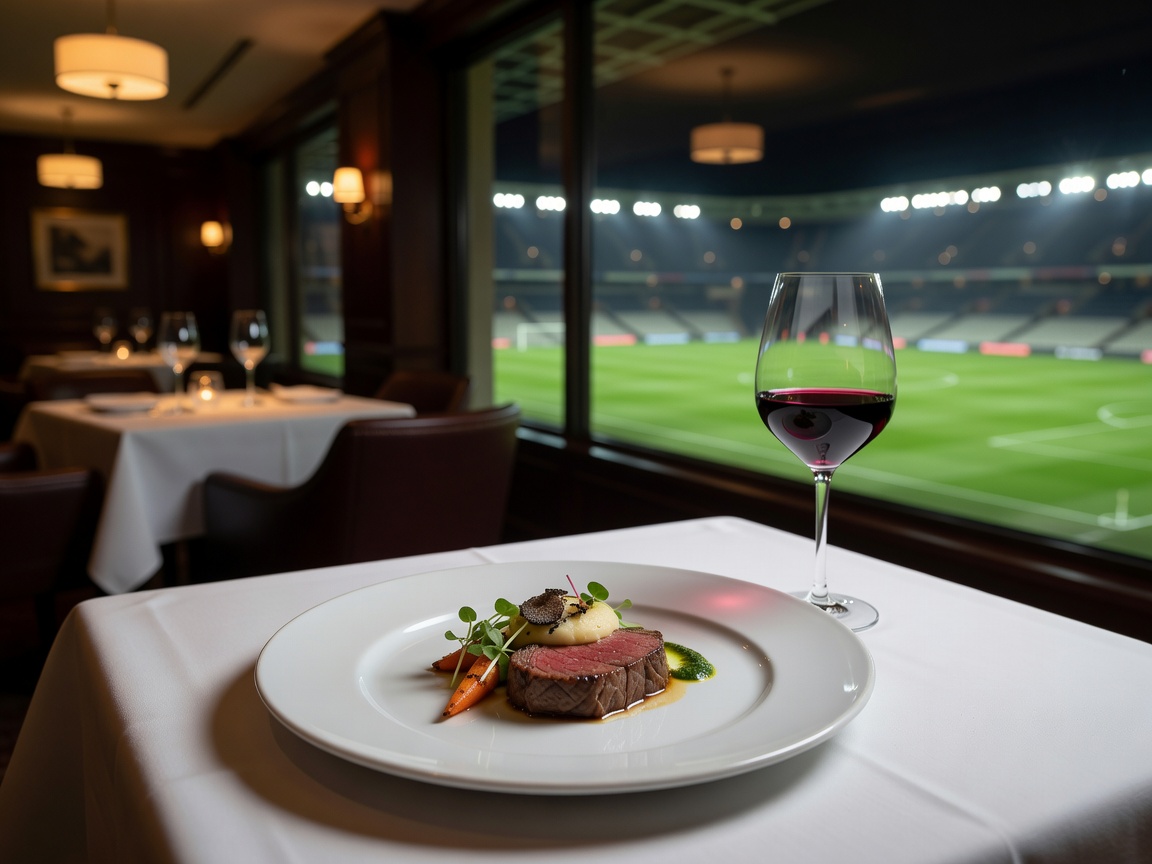
The Challenge of the Immovable Clock
In high-street fine dining, a sommelier and head chef enjoy the luxury of stretching a meal according to the guests' unhurried tempo. If guests linger over their amuse-bouche, the kitchen adjusts without consequence. In stadium hospitality, however, the clock cannot be paused. Whether hosting eighty guests in a bespoke restaurant or eight hundred across a culinary terrace, kickoff happens at the exact scheduled second, televised live across international time zones.
Delivering high-caliber dining under this strict temporal constraint is what makes modern stadium gastronomy so fascinating. It requires meticulous choreography between service personnel, kitchen pass leaders, and floor managers. The goal is to deliver three or four sumptuous courses without ever creating the anxiety of feeling rushed or having dessert arrive with only five minutes to reach your seat.
The Three Dominant Dining Formats in Contemporary Stadia
Venues today have largely abandoned the monotonous pre-set banquet chicken of the 1990s. Instead, leading facilities configure their hospitality suites and restaurants around three distinct culinary frameworks:
| Format | Structural Workflow | Guest Dynamics |
|---|---|---|
| Seated A La Carte / Tasting | Assigned private tables, synchronized table service, sommelier wine flights. | Best for entertaining major clients who expect Michelin-level attention and classic table settings. |
| Chef's Counter & Grazing | Interactive live-fire carvery, seafood raw bars, fresh pasta stations, and walk-up dessert counters. | Offers maximum dietary choice and flexibility for parties arriving at staggered times. |
| Informal Gastropub & Tapas | Small artisan plates circulated on trays, craft beer tastings, and gourmet street foods. | Relaxed, fast-paced, high energy; allows guests to eat on their feet while discussing tactics. |
Halftime Execution: The Critical Fifteen-Minute Window
A hospitality package lives or dies by its halftime execution. When forty-five minutes of intense sporting action pause, several hundred guests rush back through the concourse doors at the exact same moment. They have precisely fifteen minutes to visit restrooms, order a refreshment, enjoy a warm snack, and return to their seats.
Top-tier hospitality managers prepare for this surge with military precision:
- Pre-Poured Refreshments: Premium lagers, house wines, and chilled sparkling water are arranged on auxiliary bar trays five minutes prior to the referee's whistle.
- Table Reserves: For guests with dedicated dining tables, warm savories (such as artisan miniature pies, Welsh rarebit, or sliders) and fresh coffee are pre-set at their numbered places.
- Express Bar Lanes: Dedicated express counters serve only hot drinks or pre-batched spirits, preventing long waits for complex cocktails during the halftime rush.
Dietary Agility and Sourcing Transparency
Modern hospitality expectations mandate sophisticated accommodations for vegan, gluten-free, halal, and kosher guests. Where venues once offered an unimaginative vegetable risotto as an afterthought, premier culinary operators now design plant-based and allergen-conscious tasting menus that rival their standard selections in elegance and texture.
Furthermore, transparency in regional sourcing has become a badge of honor. Menus increasingly detail the specific heritage farms supplying grass-fed beef, regional fisheries providing day-boat catches, and local micro-breweries crafting special match-day casks. This grounds the dining experience in authentic local pride, heightening the emotional connection between the host city and the sporting occasion.
Recommendations for Hospitality Diners
To experience stadium dining at its peak, we advocate arriving precisely when hospitality areas open—typically two and a half to three hours before the event. This gives you forty-five minutes of serene conversation before the kitchen hits its peak rush. Communicate dietary preferences to your hospitality coordinator at least four working days in advance, allowing the executive chef to prepare tailored dishes without last-minute improvisations.
Curious About Culinary Menus at Specific Venues?
We provide objective insights into kitchen pacing, chef partnerships, and dietary management across leading sports venues.
Inquire About Dining Standards